
When I was a kid, there were no options to slow down how fast my myopia (nearsightedness) progressed. Every year I would go in and my optometrist would let my parents and I know that I needed stronger glasses and contacts to see clearly. Not only did this mean thicker glasses, long term this means that I am at greater risk for developing glaucoma, earlier cataracts, and retinal tears or detachments. Nowadays we have multiple options to reduce the chance of developing moderate to severe myopia.
MiSight 1 Day and Essilor Stellest lenses are two leading solutions designed to slow myopia that we offer at Visionary Eyecare. Unlike traditional glasses or contacts that only correct vision, these two treatments actively manage how a child’s eye grows. Both technologies utilize the principle of “peripheral defocus” to create a specific optical signal that tells the eye to slow its elongation (the lengthening of the eye), which is the primary cause of worsening myopia. Both options are best when started young, with MiSight contacts starting at age 8 and Stellest glasses starting at age 6.
MiSight 1 Day is a daily disposable soft contact lens and the first of its kind to be FDA-approved for myopia control in children. These lenses use ActivControl technology, featuring a central zone for clear vision surrounded by concentric treatment rings that signal the eye to slow down. In clinical trials, MiSight has been shown to reduce the rate of myopia progression by an average of 59% over three years. MiSight contacts are daily lenses, offering a hygienic, “no-maintenance” option that is best for active kids who play sports or prefer not to wear glasses.
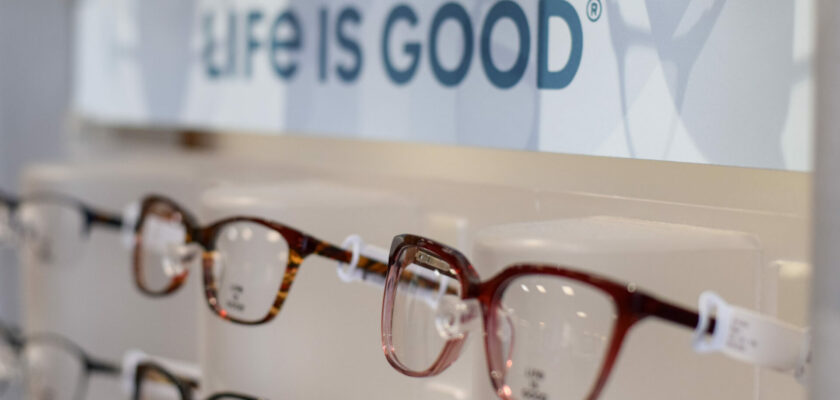
Essilor Stellest lenses provide a non-invasive alternative by building myopia-control technology directly into a child’s glasses. Using H.A.L.T. (Highly Aspherical Lenslet Target) technology, these lenses feature a ring pattern of 1,021 nearly invisible micro-lenslets that create a “volume of signal” to manage eye growth. Recent studies indicate that Stellest can slow myopia progression by an average of 67% when worn at least 12 hours a day. They look and feel like regular glasses, making them a popular “set it and forget it” choice for younger children or those not yet ready for the responsibility of contact lenses.
Stellest and MiSight are great options for myopia control and slowing down your child’s nearsighted progression is a goal worth investing in. All three of us optometrists are happy to discuss both of these technologies and determine which is best for your child and their lifestyle.